
Why Business WordPress Hosting Isn’t “One Size Fits All”
Every business relies on its website differently. Some just need a simple online presence; others depend on their site to generate leads, drive sales, publish content, or handle high-volume customer interactions. But one thing is constant: as a business grows, the demands on its website grow with it. And that’s where Business WordPress Hosting comes in.
Business-grade hosting isn’t about buying the most expensive plan or upgrading just for the sake of it. It’s about choosing hosting that actually matches the needs of your specific business model. Not every company needs premium infrastructure, but the ones that do will absolutely feel the difference. We’re talking about performance, stability, security, uptime, and ultimately revenue.
The purpose of this guide is simple: To help you determine whether your business is one of the types that truly benefits from business-grade hosting, and to understand how the right hosting choice can impact your growth, customer experience, and long-term success.
What Makes Hosting ‘Business-Grade’ (Simple Criteria Anyone Can Understand)
Before we look at the business types, it’s important to clarify what “business-grade” actually means. Foremost, it’s not a marketing term. It’s a set of non-negotiable standards designed to support websites that are mission-critical.
Here are the core components of Business WordPress Hosting:
High Uptime Reliability
Your website can’t go down during work hours, product launches, or peak traffic periods. Business-grade hosting guarantees stability so customers can always reach you.
Fast Server Technology (NVMe + LiteSpeed)
Speed is not a luxury; it’s a competitive advantage. Modern hosting uses NVMe storage and LiteSpeed servers to ensure fast load times even when your site is under stress.
Automatic Backups & Recovery
If something breaks, you need the ability to restore your site instantly. Auto-backups protect your business data and maintain uninterrupted operations.
Strong Security & Threat Prevention
Firewalls, malware scanning, login protection, bot filtering; these aren’t optional when customer data or online transactions are involved.
Scalability for Growth
As your business expands, your hosting must expand with it. Business-grade hosting offers flexible resources so your website doesn’t slow down as traffic increases.
Expert Support When You Need It
Businesses need fast, human support; not generic ticket queues. When something breaks, you need a real expert, not a script.
These criteria form the foundation of reliable business hosting because they protect your revenue, your brand, and your customer experience. If you want to quickly identify what a good WP host looks like, please check out our WordPress Checklist.
Businesses That Need Business-Grade WordPress Hosting the Most
Not every business needs business-grade hosting, but the ones below rely on their websites in ways that make performance, uptime, and reliability absolutely essential. These are the businesses that feel the difference immediately when upgrading to Business WordPress Hosting.
1. Ecommerce Stores & WooCommerce Shops
WooCommerce is powerful, but resource-heavy. Every product page, cart action, and checkout event triggers database queries and dynamic requests. On weak hosting, that becomes slow – and slow kills sales.
Ecommerce stores need business-grade hosting because:
- Checkout speed directly affects revenue
- Product images, filters, and variations require fast loading
- Downtime = instant financial loss
- Security is non-negotiable
If a store depends on online transactions, performance isn’t optional. It’s part of the business model.
Are you interested in learning more about how to optimize your WooCommerce site? Our guide on Essential Hosting Features Every WooCommerce Store Needs for Faster Growth should do the trick.
2. Service-Based Businesses (Law Firms, Agencies, Consultants)
For service-based businesses, your website is the first impression. A slow site or unreliable hosting immediately signals an unprofessional brand, even if the quality of your service is excellent.
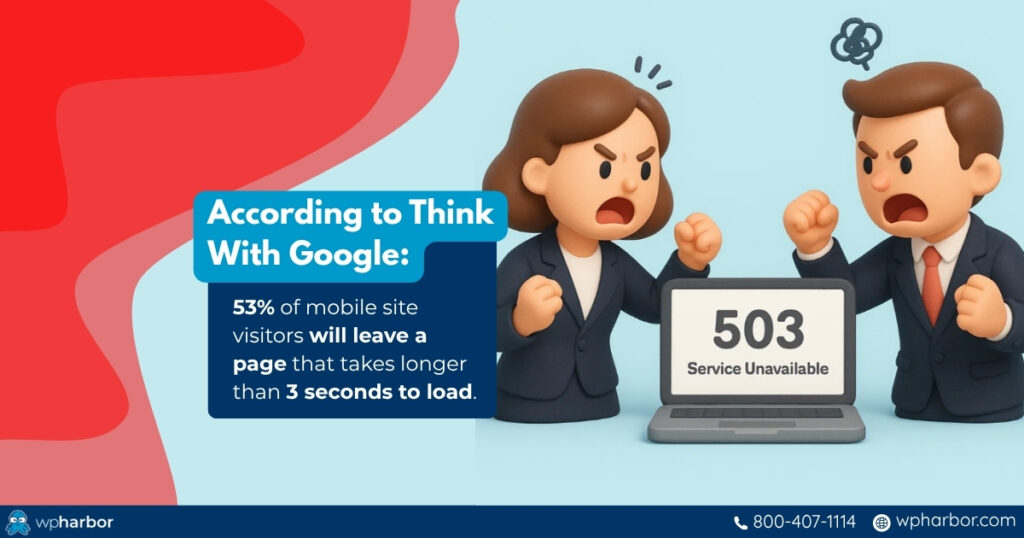
Imagine being in a meeting, excited to show a prospective client your service page or portfolio, only to run into a 503 Service Unavailable error. Not only is it embarrassing, but it also undermines trust before you’ve even started the conversation.
This is why many service-driven companies choose dependable, business-grade hosting for their websites. In fact, two of the leading law firms in Muskegon, MI, rely on WP Harbor to host and manage their sites:
- Bowen Hoogstra Law – https://bowen-law.com
- Shafer Swartz PLC – https://wemakeitright.com
These businesses benefit from business-grade hosting because:
- Clients expect instant access to information
- Lead forms must always work
- High uptime builds credibility
- Fast load times improve local SEO rankings
When reliability and reputation matter, so does your hosting.
3. Content-Heavy Websites (Blogs, Publishers, Media Brands)
Not all blogs are simple. Some content-driven businesses function more like digital magazines or small media companies. These sites publish frequently, store large archives, and rely heavily on images, embeds, database queries, and their Google ranking – all of which put real pressure on hosting.
Content-heavy websites need Business WordPress Hosting because:
- Large databases slow down without NVMe storage and advanced caching. Publishers with thousands of posts depend on fast database reads for archives, categories, tags, and search.
- Image-heavy content demands strong bandwidth and server responsiveness. Online magazines, recipe blogs, travel sites, and photography brands load dozens of images per page.
- Stable uptime protects ad revenue and algorithm-driven traffic spikes. Viral posts, social shares, and Google News placements can send sudden waves of visitors.
- Search rankings depend on delivering pages quickly to mobile users. Media brands live or die by Core Web Vitals and fast delivery of text + images. A downtime, even for an hour, can mean losing a spot on the first page.
For content-driven websites, performance isn’t just convenience. It impacts visibility, revenue, and long-term authority.
4. Online Courses & Membership Sites
LMS (learning management system) platforms, coaching communities, and paid membership sites demand far more from hosting than regular business websites. They handle real-time interactions, user logins, protected content, and sometimes streaming or downloadable resources.
Online courses and membership businesses require business-grade hosting because:
- Multiple users log in at the same time. Especially during new cohort launches, live workshops, or drip-content releases.
- Slow servers break lessons, quizzes, and student dashboards. LMS plugins like LearnDash, LifterLMS, TutorLMS, and MemberPress are database-intensive.
- Stable sessions and server caching are critical for logged-in users. Logged-in traffic cannot rely on basic page caching. It requires optimized hosting.
- Uptime ensures students always have access to what they paid for. Downtime = support tickets, refund demands, and bad reputation.
If your business sells knowledge, coaching, or recurring memberships, your hosting must support an active, engaged online community. It shouldn’t struggle under the load.
5. Local Businesses Experiencing High Traffic Spikes
Some local businesses don’t get steady, predictable traffic; they get sudden bursts. That makes reliable Business WordPress Hosting even more important. Restaurants during weekends, real estate listings during open houses, tourism sites during peak season, or wedding venues during engagement months.
These businesses benefit from business-grade hosting because:
- High traffic causes cheap hosting to crash. Local spikes can overwhelm shared servers instantly.
- Customers rely on fast access to key info: Menus, booking forms, event schedules, real estate listings, reservations.
- Promotions and ads amplify traffic volume overnight. Running a boosted Facebook post can send hundreds of visitors at once.
- Being offline during peak hours means lost leads – instantly. A 503 error during a promotional period costs real money.
If your business experiences traffic patterns you can’t predict, scalability is more than a convenience. It’s a safeguard for your busiest days.
How Poor Hosting Hurts These Businesses (Real-World Examples)
When hosting isn’t strong enough to support your business model, the problems show up fast, and usually at the worst possible time. These issues aren’t abstract technical glitches; they’re real disruptions that cost time, revenue, and customer trust.
Here are the practical, everyday problems business owners run into with weak hosting:
Slow Loading Pages Lose Customers
Visitors will not wait for your site to load. Even a two-second delay can drastically increase bounce rates, especially for ecommerce and service websites where speed influences trust.
Checkout Failures and Cart Abandonment
WooCommerce stores suffer the most. If your server can’t handle traffic or dynamic requests, customers experience failed checkouts, and they won’t try a second time.
Contact Form Errors That Kill Leads
Service-based businesses depend on form submissions. Slow hosting often causes form failures, timing out submissions, or preventing them from sending altogether.
Crashing During Promotions or Events
When a post goes viral, when you’re running ads, or when a seasonal rush hits, cheap hosting collapses under the load. Your best traffic becomes your worst outage. Instead of generating revenue, you’re losing it.
Security Vulnerabilities and Downtime
Weak hosting environments are frequent targets of malware, brute-force attacks, and server-level exploits, especially on overcrowded shared hosting.
Poor Google Rankings Due to Bad Speed Scores
Slow hosting drags down Core Web Vitals, directly hurting your SEO visibility. Google measures real-world performance, so slow servers mean poor rankings.
These issues aren’t minor annoyances; they’re roadblocks that affect conversions, credibility, and long-term growth. Strong hosting removes these risks entirely.
Signs Your Business Is Ready for a Hosting Upgrade
Not sure whether your site actually needs business-grade hosting? Here’s a practical checklist business owners can use to self-assess. If you relate to any of the signs below, your current hosting is likely holding your business back:
You’re Getting More Traffic Than Your Plan Can Handle – Spikes from ads, events, or seasonal demand cause slowdowns or outages.
You Rely Heavily on Online Sales or Lead Generation – If your website directly drives revenue, a few seconds of downtime can cost real money.
Your Site Loads Slowly Even After Optimization – If you’ve already optimized images, plugins, and caching but the site is still slow, the bottleneck is likely the server. That means the only thing left for you to do is move to a business-grade plan or a completely different host that offers such a plan.
You’re Worried About Security, Backups, or Outages – If you’ve had malware issues, unexplained downtime, or slow support in the past, that’s a strong sign your hosting plan isn’t built for business needs.
You Need Better, Faster, Human Support – Businesses need reliable support; not generic chatbots or multi-day ticket queues.
These pain points are common indicators that it’s time to upgrade to more reliable, secure, and scalable hosting. The earlier you upgrade, the more problems you avoid. This is especially true during growth.
What Business WordPress Hosting Should Include (Non-Negotiables)
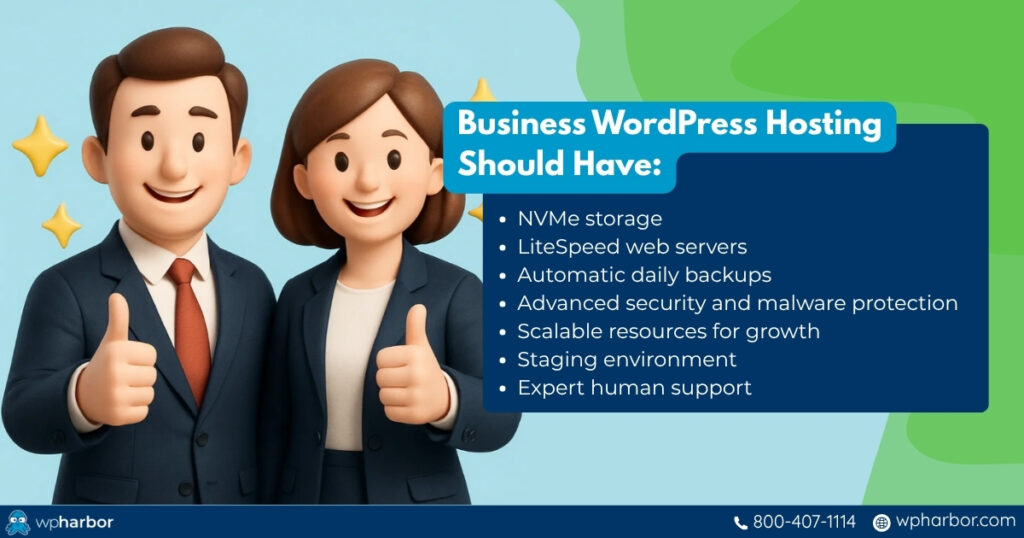
Business websites depend on a hosting environment built for speed, uptime, and security, not just basic storage and bandwidth. The right foundation prevents downtime, protects revenue, and ensures your site delivers a consistently fast experience even as your traffic or content grows. These are the minimum features your hosting should include:
- NVMe storage
- LiteSpeed web servers
- Automatic daily backups
- Advanced security and malware protection
- Scalable resources for growth
- Staging environment
- Expert human support
If you want a more detailed breakdown of why each of these features matters, explore our full guide: Must-Have Features in a Premium Managed WordPress Hosting (2025).

If Your Business Depends on Your Website, Your Hosting Matters
Your hosting plays a bigger role in your business than most people realize. For many businesses, the website is the storefront, the sales engine, the first impression, or the primary source of leads and revenue.
Ecommerce stores, service-based firms, media brands, online courses, and high-traffic local businesses all benefit immediately from Business WordPress Hosting because it gives them what cheaper hosting can’t: speed, reliability, security, and room to grow.
If your website plays a meaningful role in your business, upgrading your hosting is one of the simplest ways to improve performance, protect revenue, and support long-term success.
Give your business the infrastructure it deserves. Explore WP Harbor’s Business-Grade WordPress Hosting today.